Home/ Elements/ Mo
Molybdenum
Mo 42

Molybdenum

Molybdenum is a chemical element; it has symbol Mo and atomic number 42. The name is derived from Ancient Greek μόλυβδος mólybdos, meaning lead, since its ores were sometimes confused with those of lead. Molybdenum minerals have been known throughout history, but the element was discovered (in the sense of differentiating it as a new entity from the mineral salts of other metals) in 1778 by Swedish chemist Carl Wilhelm Scheele. Molybdenum is used primarily in high-strength steel alloys, superalloys, and as a catalyst in the petrochemical industry.

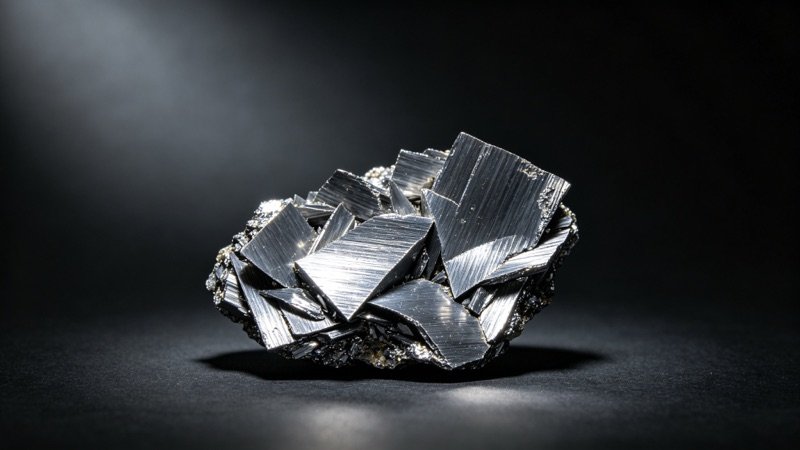
Transition Metal USGS 2025 gray metallic
Atomic number 42Z
Atomic mass 95.951u
Valence e⁻ 1
Electron config. 1s2 2s2 2p6 3s2 3p6 4s2 3d10 4p6 5s1 4d5
Density
10.28g/cm³
Melting point
2623°C
Crustal abundance
1.2ppm
Annual production
260000metric tons
Recycling rate
30%(Low recycling rate (~15%); molybdenum recovered from steel alloy scrap)

Why This Element

Molybdenum has the 6th highest melting point of any element (2,623°C) and combines moderate density with extreme strength — making it the primary alloying element for high-temperature steel and superalloys used in jet engines, power turbines, and manufacturing tooling.

Applications

Alloy steelLubricantsCatalysts

Applications in DepthElement & compound uses

Main Uses of the Element

Molybdenum is a refractory metal with a high melting point and high strength, an indispensable additive in both the steel industry and high-temperature lubrication. Its largest use is in alloy steels: trace additions of molybdenum significantly improve hardenability, high-temperature strength and resistance to temper embrittlement, so structural steels, tool steels, stainless steels and superalloys all contain molybdenum, widely used in oil and gas pipelines, pressure vessels, automotive gears and military armor. In superalloys, molybdenum is used in gas turbines and hot-extrusion dies, retaining hardness even at red heat. In lubrication, molybdenum disulfide (MoS2)'s layered structure makes it an excellent solid-lubricant additive, blended into greases, sprayed dry films and powder-metallurgy solid lubricants for bearings and gears under high-temperature, heavy-load and vacuum conditions. In catalysis, molybdenum-cobalt and molybdenum-nickel catalysts are used in petroleum hydrodesulfurization and heavy-oil upgrading, key auxiliaries of the refining industry. Molybdenum wire and sheet are also used in glass-melting electrodes and vacuum heating elements because of their low vapor pressure at high temperature and non-wetting behavior with glass.

Key Compounds and Their Uses

Molybdenum disulfide (MoS2) is a black scaly powder, the main constituent of natural molybdenite; because its layers slide easily over one another, it is an excellent solid lubricant used in high-temperature greases, dry-film coatings and self-lubricating modification of plastics such as nylon. Molybdenum trioxide (MoO3) is the intermediate oxide for producing molybdenum metal and molybdates, and is also a component of dehydrogenation and desulfurization catalysts and a colorant in ceramics and glazes. Molybdates (such as sodium molybdate and ammonium molybdate) are widely used as metal corrosion inhibitors, scale inhibitors in cooling-water systems and trace agricultural fertilizers, and are also precursors for preparing petroleum hydrodesulfurization catalysts. Molybdenite (MoS2) itself is the main ore from which molybdenum is refined, so its identity as lubricant and as metallurgical feedstock coincides in a single mineral.
Element History

Distinguished from lead ore in 1778 by Carl Wilhelm Scheele, who showed it formed a distinct acidic oxide. Isolated as impure metal in 1783 by Peter Jacob Hjelm. Commercial production began in the early 20th century from byproduct of copper mining, with the Climax Molybdenum mine (Colorado) becoming the world's largest producer.

Alloys of this element (5)

View all alloys → TZM MoLa MoRe47 MoSi2 Mo41Re

Related Elements

Sc · Scandium Ti · Titanium V · Vanadium Cr · Chromium Mn · Manganese Fe · Iron Co · Cobalt Ni · Nickel

Frequently Asked QuestionsLong-tail Q&A · data-driven

What is the melting point of Molybdenum?
2623 °C
What is the boiling point of Molybdenum?
4639 °C
What is the density of Molybdenum?
10.28 g/cm³
What are the atomic number and category of Molybdenum?
42 · Transition Metal
Which ore is Molybdenum mainly extracted from?
molybdenite
What are the world reserves of Molybdenum?
15000 metric tons
What is the annual production of Molybdenum?
260000 metric tons
What are the main uses of Molybdenum?
Molybdenum has the 6th highest melting point of any element (2,623°C) and combines moderate density with extreme strength — making it the primary alloying element for high-temperature steel and superalloys used in jet en
Who discovered Molybdenum and when?
Carl Wilhelm Scheele · 1781