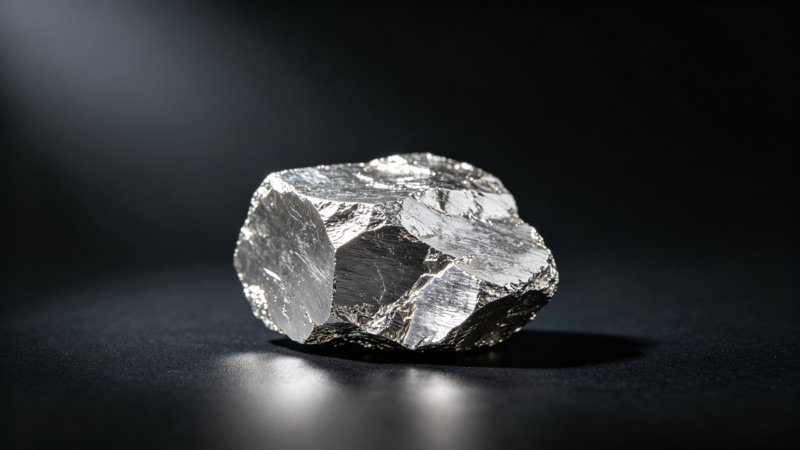
Scandium is a dispersed metal whose crustal abundance is not especially low yet is extremely dispersed; output is tiny and prices are high, so it has always remained a strategic material reserved for critical roles. Its most mature use is as a trace alloying element in aluminum alloys: adding a few thousandths of scandium to aluminum markedly refines the grains, raises strength and weldability, and suppresses recrystallization; these aluminum-scandium alloys are used in some military aircraft structural parts and aerospace rocket tanks, and are also gradually moving into high-end sports equipment such as bicycle frames, baseball bats and tent poles. In the energy field, scandia-stabilized zirconia used as the electrolyte of solid oxide fuel cells (SOFCs) can generate power efficiently at medium-high temperatures and is regarded as an important direction for clean distributed power. In addition, scandium halides are used in metal halide lamps; the high-efficacy, high-color-rendering scandium-sodium lamps are commonly used in stadiums and large factory halls. Scandium is irreplaceable despite its small consumption because trace additions bring a step change in alloy performance, and because it forms no independent ore deposit and can only be recovered as a trace by-product from uranium, titanium and tungsten ores.
Scandium oxide (Sc2O3) is the principal scandium compound, a white powder that is the starting material for preparing metallic scandium, scandium-aluminum alloys and SOFC electrolytes, and is also used in specialty glass and electronic ceramics. Scandium chloride (ScCl3) is an intermediate in the hydrometallurgical extraction of scandium and in preparing other scandium compounds, and is used in materials research as a catalyst and as a Lewis acid reagent in organic synthesis. Scandium fluoride (ScF3) is used mainly to prepare the discharge-fill materials of metal halide lamps and specialty optical glass; it also exhibits an unusual low thermal-expansion behavior and is of interest in precision optics and low-expansion materials research. Because scandium itself is produced in extremely small quantities, the global consumption of these compounds is all measured in kilograms, making them typical high-priced niche chemicals. Scandium forms almost no independent ore deposits in nature; industrially it is recovered mainly as a by-product from the leachates of uranium ores, tungsten ores and bauxite red mud, which has long kept its compounds expensive and traded by the kilogram or even gram.