Home/ Elements/ Zn
Zinc
Zn 30

Zinc

Zinc is a chemical element; it has symbol Zn and atomic number 30. It is a slightly brittle metal at room temperature and has a shiny blue-whitish appearance when surface oxidation is removed. It is the first element in group 12 of the periodic table. Zinc is the 24th most abundant element in Earth's crust. It is most commonly used to galvanize steel to prevent rusting, in die-casting alloys, and as the anode in zinc-carbon and alkaline batteries.

Transition Metal USGS 2025 silver-gray
Atomic number 30Z
Atomic mass 65.382u
Valence e⁻ 2
Electron config. 1s2 2s2 2p6 3s2 3p6 4s2 3d10
Density
7.14g/cm³
Melting point
420°C
Crustal abundance
70.0ppm
Annual production
12000thousand metric tons
Recycling rate
30%(Moderate recycling rate (~40%); zinc recovered from galvanized steel scrap)

Why This Element

Zinc is the 23rd most abundant element in Earth's crust and the 4th most-produced metal globally. Its industrial value stems from three properties: lower electrode potential than iron (enabling sacrificial corrosion protection via galvanizing), essential micronutrient for all life, and role in rechargeable alkaline battery anodes.

Applications

GalvanizingBrassBatteriesAlloys

Applications in DepthElement & compound uses

Main Uses of the Element

Zinc is a bluish-white, reactive metal whose tonnage is far below that of iron, steel and copper, yet it plays a steady role in three fields: corrosion protection, alloys and batteries. Its largest use is hot-dip galvanizing: steel sheet or wire is dipped in molten zinc to form a dense zinc layer that sacrificially protects the steel when corrosion begins, so galvanized sheet, pipe and fittings are widely used on roofing panels, highway guardrails, lampposts and transmission towers, making galvanizing the dominant anti-corrosion route for steel worldwide. Brass, a copper-zinc alloy, combines the workability of copper with the strength and wear resistance of zinc and is used in taps, valves, locks, musical instruments and decorative hardware. In batteries, zinc-carbon and alkaline zinc-manganese cells use zinc as the negative can or gel anode in enormous volumes, while zinc-air and zinc-bromine flow batteries are hot topics in energy-storage research. Zinc also goes into die-casting alloys (precision die castings for cars and home appliances), metallurgical reducing agents, and raw materials for pesticides and pharmaceuticals.

Key Compounds and Their Uses

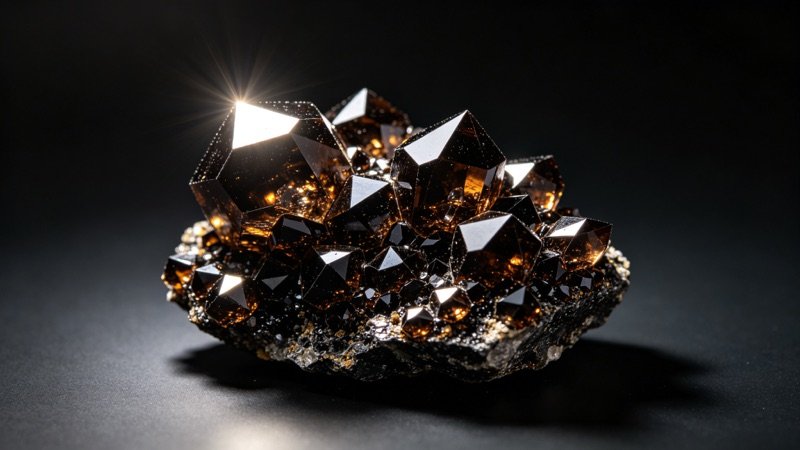
ZnS, i.e. sphalerite, is the main ore for zinc smelting; after flotation it is roasted to zinc oxide, from which metallic zinc is extracted by hydrometallurgical or pyrometallurgical routes. Zinc oxide (ZnO), a widely used white powder known as zinc white, acts as a vulcanization activator in rubber tires, as a white pigment in plastics and paints, as a UV absorber in sunscreens, and as a raw material for electronic ceramics such as varistors. Zinc sulfate (ZnSO4) is used as a trace zinc additive in animal feed and crop fertilizers, and also in viscose-fiber spinning baths and electroplating. Zinc chloride (ZnCl2) is a main constituent of soldering flux, a wood preservative and a battery electrolyte, and is also used medicinally as an astringent and deodorant.
Element History

Known to ancient metallurgists who produced brass (copper-zinc alloy) without isolating pure zinc. Distinctly mentioned by Paracelsus in the early 16th century and first isolated as a pure metal by Andreas Marggraf in 1746 via distillation of calamine ore. Commercial production began in the 19th century; approximately 70% of current production goes to galvanizing.

Alloys of this element (8)

View all alloys → Zamak 3 Zamak 5 Zamak 7 ZA-8 ZA-12 ZA-27 Zamak 2 Superloy

Related Elements

Sc · Scandium Ti · Titanium V · Vanadium Cr · Chromium Mn · Manganese Fe · Iron Co · Cobalt Ni · Nickel

Frequently Asked QuestionsLong-tail Q&A · data-driven

What is the melting point of Zinc?
420 °C
What is the boiling point of Zinc?
907 °C
What is the density of Zinc?
7.14 g/cm³
What are the atomic number and category of Zinc?
30 · Transition Metal
Which ore is Zinc mainly extracted from?
sphalerite
What are the world reserves of Zinc?
230000 thousand metric tons
What is the annual production of Zinc?
12000 thousand metric tons
What are the main uses of Zinc?
Zinc is the 23rd most abundant element in Earth's crust and the 4th most-produced metal globally. Its industrial value stems from three properties: lower electrode potential than iron (enabling sacrificial corrosion prot
Who discovered Zinc and when?
India · 1746