Home/ Elements/ Np
Neptunium
Np 93

Neptunium

Neptunium is a chemical element; it has symbol Np and atomic number 93. A radioactive actinide metal, neptunium is the first transuranic element. Its position in the periodic table just after uranium, named after the planet Uranus, led to it being named after Neptune, the next planet beyond Uranus. Neptunium was discovered in 1940 by Edwin McMillan and Philip H. Abelson by bombarding uranium with neutrons. Due to its radioactivity and long half-life, neptunium-237 is considered a significant radiological hazard in nuclear waste. It has no commercial applications.

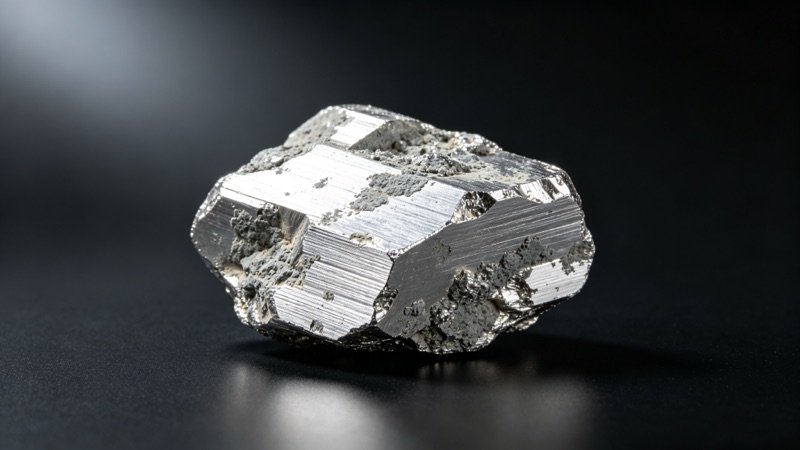
Actinide silvery metallic
Atomic number 93Z
Atomic mass 237u
Valence e⁻ 2
Electron config. 1s2 2s2 2p6 3s2 3p6 4s2 3d10 4p6 5s2 4d10 5p6 6s2 4f14 5d10 6p6 7s2 5f4 6d1
Density
20.45g/cm³
Melting point
639°C
Crustal abundance
4e-08ppm
Annual production
—
Recycling rate
0%(Radioactive element; recycled as part of nuclear fuel reprocessing)

Why This Element

Neptunium was the first transuranium element discovered, opening the path to actinide chemistry. No commercial applications exist; Np-237 is produced as a byproduct of nuclear power fission and represents a minor nuclear waste component. Studied for its potential as a nuclear fuel component in advanced reactor designs.

Applications

ResearchNuclear reactors

Applications in DepthElement & compound uses

Main Uses of the Element

Neptunium was the first transuranium element to be synthesized. In nature it appears only as a trace neutron-activation product in uranium ores; industrially it is separated mainly as a by-product of reactor irradiation of uranium fuel. Its most stable isotope, neptunium-237, has a half-life of about 2.14 million years. It is intensely radioactive and has no consumer or industrial-scale practical use. Today neptunium is studied chiefly in nuclear-fuel reprocessing and radioactive-waste disposal research, where it is the representative long-lived minor actinide used to assess the long-term radiological risk of high-level waste; there is also limited research on the possibility of irradiating neptunium-237 to produce plutonium-238, the fuel of space-based radioisotope heat sources.

Key Compounds and Their Uses

Neptunium compounds such as neptunium dioxide (NpO2) and neptunium hexafluoride (NpF6) are prepared only in trace amounts in nuclear-fuel reprocessing and radiochemical laboratories, where they are used in actinide separation flowsheets and thermodynamic-property studies; they do not enter consumer products.

Element History

Discovered in 1940 by Edwin McMillan and Philip Abelson, who bombarded uranium-238 with neutrons to produce neptunium-239 — the first transuranium element synthesized. Np-237 (2.14 million-year half-life) is the most stable isotope. Neptunium traces exist naturally in uranium ore from neutron activation.

Related Elements

Ac · Actinium Th · Thorium Pa · Protactinium U · Uranium Pu · Plutonium Am · Americium Cm · Curium Bk · Berkelium

Frequently Asked QuestionsLong-tail Q&A · data-driven

What is the melting point of Neptunium?
639 °C
What is the boiling point of Neptunium?
4174 °C
What is the density of Neptunium?
20.45 g/cm³
What are the atomic number and category of Neptunium?
93 · Actinide
Which ore is Neptunium mainly extracted from?
Nuclear reactor (synthetic)
What are the main uses of Neptunium?
Neptunium was the first transuranium element discovered, opening the path to actinide chemistry. No commercial applications exist; Np-237 is produced as a byproduct of nuclear power fission and represents a minor nuclear
Who discovered Neptunium and when?
Edwin McMillan · 1940