Home/ Elements/ Ac
Actinium
Ac 89

Actinium

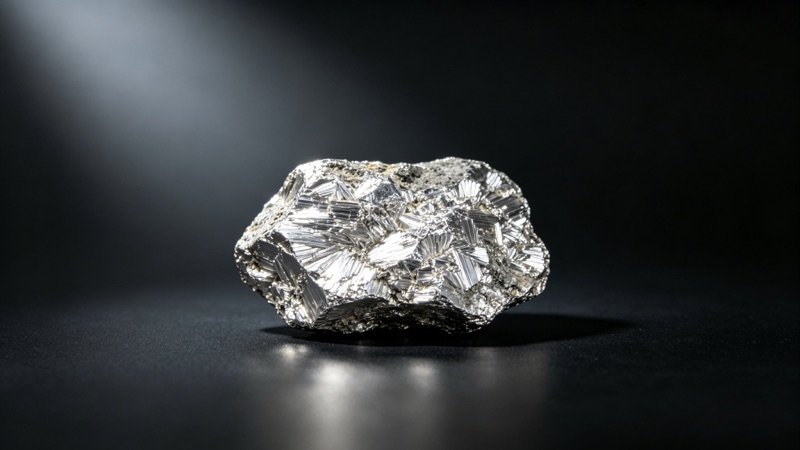
Actinium is a chemical element; it has symbol Ac and atomic number 89. It was first isolated by French chemist André-Louis Debierne in 1899. The name actinium comes from the Greek word aktis (ἀκτίς), meaning beam or ray. Actinium gives off a bluish glow because the surrounding air is energized by its radioactivity. Actinium is a soft, silvery-white radioactive metal. It has no significant commercial applications due to its rarity and high radioactivity, but is used in targeted radiation therapy and as a neutron source.

Actinide 70abfa
Atomic number 89Z
Atomic mass 227u
Valence e⁻ 2
Electron config. 1s2 2s2 2p6 3s2 3p6 4s2 3d10 4p6 5s2 4d10 5p6 6s2 4f14 5d10 6p6 7s2 6d1
Density
10.0g/cm³
Melting point
1227°C
Crustal abundance
5.5e-10ppm
Annual production
—
Recycling rate
0%(Radioactive element; no recycling stream)

Why This Element

Actinium is one of the most radioactive natural elements — Ac-227 produces 150 times more radiation than an equivalent mass of uranium. No stable isotopes exist. Due to its rarity and radioactivity, actinium has virtually no industrial applications beyond fundamental research and occasional medical use as a radiation source.

Applications

Radiotherapy

Applications in DepthElement & compound uses

Main Uses of the Element

Actinium is the lowest-atomic-number radioactive metal of the actinide series. It occurs naturally in uranium ores but at extremely low levels—one tonne of uranium ore contains only about 0.2 milligrams of actinium. Even its most stable isotope, actinium-227, has a half-life of only about 21.8 years, so macroscopic quantities cannot be accumulated. Because of its intense radioactivity and extreme scarcity, actinium has no industrial or consumer use. Today it is studied mainly in nuclear chemistry and targeted radiopharmaceutical research, with work underway to explore actinium-225 for targeted alpha therapy.

Key Compounds and Their Uses

Actinium compounds such as actinium(III) oxide (Ac2O3) and actinium trifluoride (AcF3) can only be isolated in trace amounts from irradiated targets in the laboratory and are used to study chemical properties; they have no large-scale application.

Element History

Discovered in 1899 by French chemist André-Louis Debierne, who found an unknown radioactive substance in pitchblende uranium ore. Independently isolated by Friedrich Giesel in 1902. Actinium-227 has a 21.8-year half-life, the longest-lived natural isotope. Named by Debierne for its intense radioactivity.

Related Elements

Th · Thorium Pa · Protactinium U · Uranium Np · Neptunium Pu · Plutonium Am · Americium Cm · Curium Bk · Berkelium

Frequently Asked QuestionsLong-tail Q&A · data-driven

What is the melting point of Actinium?
1227 °C
What is the boiling point of Actinium?
3227 °C
What is the density of Actinium?
10.0 g/cm³
What are the atomic number and category of Actinium?
89 · Actinide
Which ore is Actinium mainly extracted from?
Radium decay product
What are the main uses of Actinium?
Actinium is one of the most radioactive natural elements — Ac-227 produces 150 times more radiation than an equivalent mass of uranium. No stable isotopes exist. Due to its rarity and radioactivity, actinium has virtuall
Who discovered Actinium and when?
Friedrich Oskar Giesel · 1899