Home/ Elements/ Eu
Europium
Eu 63

Europium

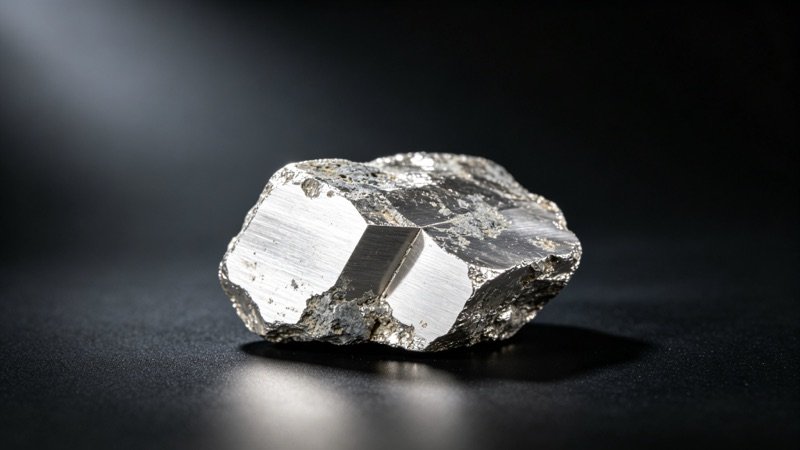
Europium is a chemical element; it has symbol Eu and atomic number 63. Europium is a silvery-white metal that glows red under UV light and is one of the rarest and least abundant of the lanthanides. Europium was isolated in 1901 and is named after the continent of Europe. It is a moderately hard metal that easily oxidizes in air and water. Europium compounds are used as phosphors in red laser pointers, euro banknotes (as a counterfeiting measure), and in the control rods of some nuclear reactors.

Lanthanide USGS 2025 61ffc7
Atomic number 63Z
Atomic mass 151.964u
Valence e⁻ 2
Electron config. 1s2 2s2 2p6 3s2 3p6 4s2 3d10 4p6 5s2 4d10 5p6 6s2 4f7
Density
5.26g/cm³
Melting point
826°C
Crustal abundance
1.2ppm
Annual production
200tonnes REO
Recycling rate
1%(Low recycling rate; recovered from phosphors and lighting)

Why This Element

Europium is the rarest stable lanthanide (only promethium is rarer, but radioactive). Its industrial value centers on europium-doped phosphors that produce the ideal red color for color TV, LED, and fluorescent lighting — and its role in quantum memory and security tagging applications leveraging its unique fluorescence properties.

Applications

Red phosphorsNuclear control rods

Applications in DepthElement & compound uses

Main Uses of the Element

Europium is among the most chemically reactive and most chemically reactive of the rare earths and the most efficient luminescent emitters, and its value lies almost entirely in phosphors and nuclear energy. Europium ions emit vivid red light and highly efficient blue light under ultraviolet or blue excitation, which is why it has been an indispensable activator in trichromatic phosphors ever since the color-television tube era: trivalent europium gives the characteristic red emission, divalent europium the characteristic blue, and together with green emission from terbium or cerium they form the trichromatic fluorescent lamps and white LEDs. The modern lighting and display industry's demand for high-color-rendering, high-efficiency white light essentially cannot be met without these two europium phosphors. In banknote anti-counterfeiting, europium-based fluorescent patterns printed on notes such as the euro become visible under ultraviolet light, an important security feature. On the nuclear side, europium-151 has an extremely high thermal-neutron absorption cross-section and is made into control rods and burnable poisons used for reactor power regulation and shutdown.

Key Compounds and Their Uses

Eu2O3 (europium(III) oxide) is the principal industrial oxide of europium. It is a near-white powder with a faint pink tinge, and is the precursor for preparing red and blue phosphors, as well as the feedstock for rare-earth glass additives and reactor neutron-absorbing materials. EuCl3 (europium trichloride) is an intermediate in the extraction and separation flowsheet; reduction yields divalent europium compounds, and it is also used in research and in the synthesis of luminescent materials. The so-called europium-activated blue phosphor generally refers to the divalent-europium-activated barium magnesium aluminate phosphor (BAM, BaMgAl10O17:Eu2+), which provides efficient blue light in trichromatic energy-saving lamps and LCD backlight tubes; the trivalent-europium-activated yttrium oxide red phosphor (Y2O3:Eu3+), for its part, is the most classic red component in trichromatic lamps and white LEDs, and was also used in plasma displays and long-persistence afterglow materials.
Element History

Eugène Anatole Demarçay detected europium spectroscopically in 1901 while analyzing samarium oxide — which he found contained a previously unknown element. Isolated as pure metal in 1904. Currently recovered as a byproduct from monazite and bastnäsite ores. Its primary commercial importance emerged in the 1960s with color TV phosphor technology.

Related Elements

La · Lanthanum Ce · Cerium Pr · Praseodymium Nd · Neodymium Pm · Promethium Sm · Samarium Gd · Gadolinium Tb · Terbium

Frequently Asked QuestionsLong-tail Q&A · data-driven

What is the melting point of Europium?
826 °C
What is the boiling point of Europium?
1529 °C
What is the density of Europium?
5.26 g/cm³
What are the atomic number and category of Europium?
63 · Lanthanide
Which ore is Europium mainly extracted from?
bastnäsite, monazite
What are the world reserves of Europium?
6000000 tonnes REO
What is the annual production of Europium?
200 tonnes REO
What are the main uses of Europium?
Europium is the rarest stable lanthanide (only promethium is rarer, but radioactive). Its industrial value centers on europium-doped phosphors that produce the ideal red color for color TV, LED, and fluorescent lighting
Who discovered Europium and when?
Eugène-Anatole Demarçay · 1896