Home/ Elements/ N
Nitrogen
N 7

Nitrogen

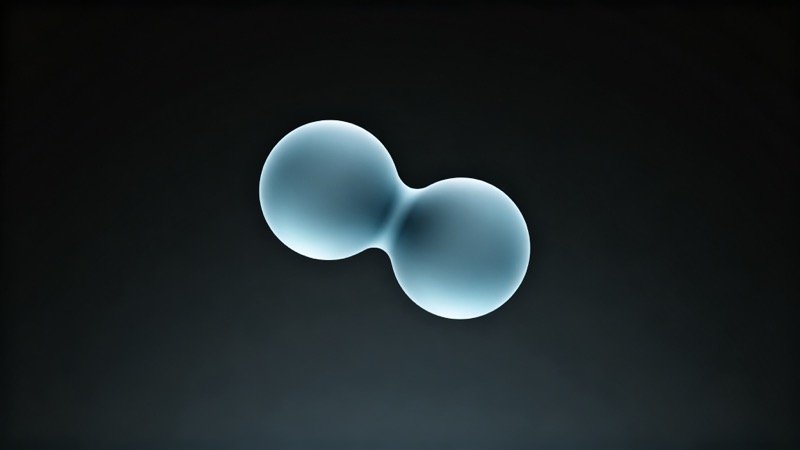
Nitrogen is a chemical element; it has symbol N and atomic number 7. Nitrogen is a nonmetal and the lightest member of group 15 of the periodic table, often called the pnictogens. It is a common element in the universe, estimated at seventh in total abundance in the Milky Way and Solar System. At standard temperature and pressure, two nitrogen atoms bond to form N2, a colorless and odorless diatomic gas that makes up 78% of Earth's atmosphere. The Haber process for ammonia synthesis from nitrogen has revolutionized global agriculture by enabling fertilizer production.

Nonmetal colorless gas, liquid or solid
Atomic number 7Z
Atomic mass 14.007u
Valence e⁻ 5
Electron config. 1s2 2s2 2p3
Density
1.25g/cm³
Melting point
-210°C
Crustal abundance
19.0ppm
Annual production
—
Recycling rate
A component of air, regenerated by air separation

Why This Element

Nitrogen forms an extraordinarily stable diatomic molecule (N₂) with a triple bond of 946 kJ/mol — the strongest bond between any two identical atoms. This stability makes nitrogen highly inert yet energetically valuable: breaking that bond via the Haber process to produce ammonia sustains global agriculture, while N₂'s non-reactivity makes it an ideal protective gas across industries.

Applications

Ammonia synthesisFood preservationElectronics manufacturingInert shieldingLiquid-nitrogen cooling

Applications in DepthElement & compound uses

Main Uses of the Element

Nitrogen is the most abundant element in Earth's atmosphere, making up roughly 78 percent of air by volume. At room temperature it is a colorless, odorless gas with a density around 1.251 g/L; because the N≡N triple bond is extremely strong, its chemistry is remarkably stable. Its largest industrial role is as feedstock for ammonia synthesis: pure nitrogen produced from air separation, together with hydrogen, enters the Haber-Bosch loop and is converted into ammonia, then into urea, ammonium nitrate and compound fertilizers that support global agriculture. Liquid nitrogen, at about -196°C, is the cheapest, most readily available cryogen and is widely used for quick-freezing food, the long-term storage of biological samples and of sperm and ova, cryotherapy in hospitals, and superconducting cables and cryogenic experiments.

In chemical, electronics and food industries, nitrogen is heavily used as an inert shielding gas because of its stability: to prevent oxidation of flammable or explosive materials, to protect polysilicon and optical fibers from oxygen contamination at high temperature, and to prevent rancidity and discoloration of oils and pigments in packaged snacks and milk powder. In steel and metallurgy, combined-blown converters use nitrogen to stir molten steel and improve composition uniformity. In petroleum refining and pipeline transport, nitrogen purges and displaces flammable gases to make inspection and maintenance safer. In tires and aircraft fuel systems, nitrogen charging reduces oxidative corrosion and deflagration risks caused by oxygen and moisture. Nitrogen is chosen precisely because it is nearly unlimited in supply, cheap, inert, and can be liquefied into an inexpensive cryogen.

Key Compounds and Their Uses

Nitrous oxide (N2O), or laughing gas, was historically used as an inhaled anesthetic in dentistry and surgery; today it is more commonly used as a silicon-nitride source in semiconductor CVD processes, as a rocket oxidizer, in nitrous-injection systems for racing, and in small amounts as a whipped-cream propellant. Ammonia (NH3) goes beyond fertilizers as the feedstock for nitric acid, soda ash, urea, acrylonitrile and many amines; liquid ammonia itself is also a refrigerant in large cold-storage plants and thermal power stations, and a reducing agent in selective catalytic reduction of flue-gas NOx. Nitric acid (HNO3) is one of the most important industrial strong acids, used to manufacture nitrogen fertilizers, explosives, nitro coatings and adipic acid, and is a key raw material for petrochemicals, defense production and precious-metal refining; dilute nitric acid is also a common oxidizing pickling reagent in laboratories.
Element History

Isolated and identified as a distinct gas in 1772 by Daniel Rutherford, who showed it was distinct from fixed air (CO₂). The Haber–Bosch process — enabling ammonia synthesis from atmospheric nitrogen — was developed in 1909–1913 and remains one of the most impactful technological innovations in human history, supporting roughly half of global food production.

Alloys of this element (2)

View all alloys → GaN Si3N4

Related Elements

H · Hydrogen C · Carbon O · Oxygen P · Phosphorus S · Sulfur Se · Selenium

Frequently Asked QuestionsLong-tail Q&A · data-driven

What is the melting point of Nitrogen?
-210 °C
What is the boiling point of Nitrogen?
-196 °C
What is the density of Nitrogen?
1.25 g/cm³
What are the atomic number and category of Nitrogen?
7 · Nonmetal
Which ore is Nitrogen mainly extracted from?
none — extracted from air
What are the main uses of Nitrogen?
Nitrogen forms an extraordinarily stable diatomic molecule (N₂) with a triple bond of 946 kJ/mol — the strongest bond between any two identical atoms. This stability makes nitrogen highly inert yet energetically valuable
Who discovered Nitrogen and when?
Daniel Rutherford · Ancient (known since antiquity)