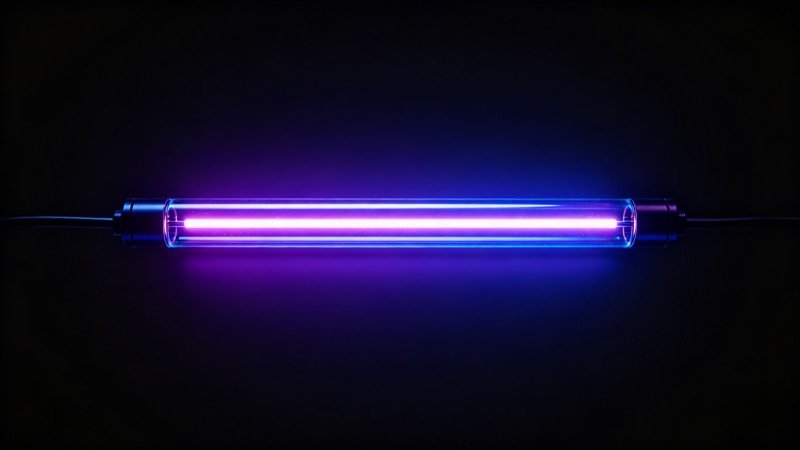
Argon is the most abundant noble gas in air, making up about one percent of its volume, with a density of about 1.784 g/L and a melting point around −189 °C; its extreme chemical inertness makes it a widely used inert shielding gas. In welding, gas tungsten arc welding uses argon to exclude air, protecting reactive metals such as stainless steel, aluminum, and titanium from oxidation at high temperatures, widely applied to pressure vessels, piping, aerospace, and precision structural welding. In lighting, argon is filled into incandescent and fluorescent lamps to slow tungsten evaporation and extend lamp life. In semiconductor manufacturing, argon is used in crystal growth, plasma etching, and ion implantation, an indispensable process gas for chip fabrication. It also serves in argon-oxygen decarburization AOD furnaces for stainless steel refining, modified-atmosphere preservation of artifacts, and specialty lamp filling.
Argon is a noble gas with a saturated outer electron shell and forms almost no stable compounds with any element, so it has no common compounds in the traditional sense. Industrially it is used directly as elemental gas, stored in steel cylinders or Dewar flasks, with liquid argon used for cryogenic storage and transport. A very few argon compounds synthesized under extreme conditions, such as argon fluorohydride HArF, exist only in low-temperature matrices and are used solely in basic research, never entering civilian products.